

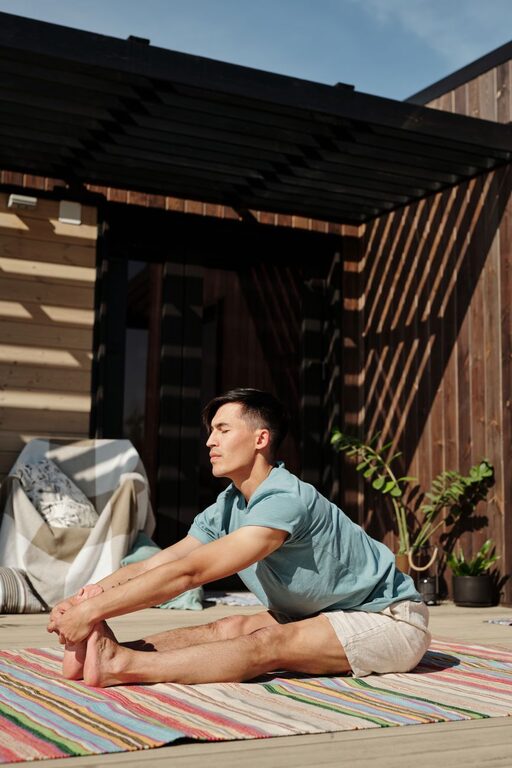
Flexibility can make everyday movement feel easier, from reaching for a high shelf to bending down to tie your shoes. You do not need special equipment or a gym membership to work on your flexibility. A few simple stretches at home can help you move through a comfortable range of motion and build a consistent wellness habit.
The key is to stretch gently and regularly. You should feel mild tension, but not sharp pain. Move slowly, breathe naturally, and avoid forcing your body into a position that feels uncomfortable.
Before You Start
Stretching is often more comfortable when your body is warm. Try these routines after a short walk around your home, a few minutes of easy movement, or another light activity.
Keep these basic guidelines in mind:
– Move slowly into each stretch.
– Hold each position for 15 to 30 seconds.
– Breathe steadily instead of holding your breath.
– Keep your movements controlled.
– Stretch both sides of your body when appropriate.
– Stop if you feel pain, numbness, or sudden discomfort.
– Use a wall, chair, or cushion for support if needed.
A regular routine is more useful than an occasional long session. Even 5 to 10 minutes a day can help you become more aware of how your body moves.
Five-Minute Full-Body Routine
This simple routine covers several major areas of the body. It works well in the morning, during a work break, or in the evening.
1. Neck and Upper Shoulder Stretch
Sit or stand tall with your shoulders relaxed. Slowly lower your right ear toward your right shoulder without lifting the shoulder. Hold the position, then return to the center and repeat on the other side.
Next, turn your head gently to look over your right shoulder. Return to the center and repeat on the left.
Complete two rounds on each side. Keep the movement small and comfortable. Do not pull on your head with your hand.
2. Shoulder and Chest Opener
Stand with your feet about hip-width apart. Clasp your hands behind your back, or simply reach your arms behind you as far as feels comfortable. Gently draw your shoulders back while keeping your chest relaxed.
Hold for 15 to 20 seconds, then release. Repeat two or three times.
If clasping your hands is difficult, hold a towel between them. This allows your hands to stay farther apart while you work on the same general movement.
3. Standing Side Stretch
Stand tall with your feet comfortably apart. Raise your right arm overhead and slowly lean to the left. Keep both feet on the floor and avoid twisting your body forward.
You should feel a gentle stretch along the right side of your torso. Hold, return to the center, and repeat on the other side.
Try two repetitions per side while breathing slowly.
4. Standing Forward Fold
Stand with your knees slightly bent. Slowly hinge at your hips and let your upper body fold forward. Allow your arms to hang toward the floor or rest them on your thighs.
Do not worry about touching your toes. The goal is to create a gentle stretch along the back of your legs and lower back area without rounding or forcing your spine.
Hold for 20 to 30 seconds. To come up, bend your knees a little more and slowly roll or lift your body back to standing.
5. Calf Stretch Against a Wall
Place your hands on a wall. Step your right foot back and keep the heel on the floor. Bend your front knee slightly while keeping the back leg comfortably extended.
Lean forward until you feel a mild stretch in the calf of your back leg. Hold for 20 to 30 seconds, then switch sides.
Keep the toes of both feet pointed generally toward the wall. This helps you maintain a steady position.
Seated Routine for Small Spaces
A seated routine is useful if you spend much of the day at a desk or prefer to stretch on the floor. Sit on a firm, comfortable surface and keep your back as upright as you can.
Seated Hamstring Stretch
Extend your right leg in front of you while keeping the left knee bent. Sit tall, then lean forward slightly from your hips. Reach toward your shin or ankle without pulling.
Hold for 20 to 30 seconds, then switch legs. Keep a small bend in the extended knee if that feels more comfortable.
Seated Figure Four Stretch
Sit with both feet on the floor. Place your right ankle over your left thigh. Keep your back tall and lean forward slightly until you feel a gentle stretch around your hip.
Hold the position, then switch sides. If your knees feel uncomfortable, reduce the angle or return both feet to the floor.
Seated Torso Rotation
Sit tall with your feet on the floor. Place your right hand on the outside of your left thigh and slowly turn your upper body to the left. Keep the movement easy and avoid pulling yourself into a deeper twist.
Return to the center and repeat on the other side. Perform two gentle repetitions per side.
Lower-Body Routine
The hips, thighs, and calves play an important role in many everyday movements. This routine can be done after a walk or as a separate session.
Standing Quadriceps Stretch
Stand near a wall or chair for balance. Bend your right knee and bring your heel toward your seat. Hold your ankle or pant leg if you can do so comfortably.
Keep your knees close together and avoid arching your back. Hold for 15 to 30 seconds, then switch sides.
If reaching your foot is difficult, place the top of your foot on a low, stable surface behind you instead.
Low Lunge Stretch
Start in a half-kneeling position with your right foot in front and your left knee resting on a cushion. Place your hands on your front thigh or on the floor for support.
Keep your chest lifted and slowly shift your hips forward a small amount. You should feel a stretch at the front of the left hip. Hold, return to the starting position, and switch sides.
Move only as far as you can while keeping your balance and comfort.
Inner-Thigh Stretch
Stand with your feet wider than hip-width apart. Bend your right knee while keeping your left leg relatively straight, then shift your weight toward the right side.
You should feel a gentle stretch along the inner left thigh. Return to the center and repeat on the other side. Keep your movements slow and avoid bouncing.
How to Build a Consistent Habit
A stretching routine is easier to maintain when it fits naturally into your day. Consider these simple strategies:
– Stretch after brushing your teeth or getting dressed.
– Keep a mat or towel visible in a comfortable space.
– Set a reminder for a short movement break.
– Start with five minutes instead of aiming for a long session.
– Repeat the same routine for a week before adding more stretches.
– Track how often you stretch rather than focusing on how far you can reach.
Flexibility develops gradually. You may notice that certain movements feel more comfortable before you see a major change in your range of motion. Focus on steady practice, relaxed breathing, and good control.
Final Tips for Comfortable Stretching
The best routine is one you can perform consistently and safely. Avoid bouncing, rushing, or comparing your flexibility with someone else’s. Your range of motion can vary from day to day depending on your activity level, sleep, and general comfort.
If a stretch causes sharp pain, tingling, or unusual discomfort, stop and choose a gentler movement. When in doubt about whether a particular stretch is suitable for you, ask a qualified fitness professional for guidance.
With a few minutes of mindful stretching at home, you can create a simple routine that supports comfortable movement and makes daily activity feel more enjoyable.